



Guide · 3 min read
Herringbone vs chevron
Introduction
They are often confused, and they behave completely differently underfoot. The difference is in the cut of the block.
The difference
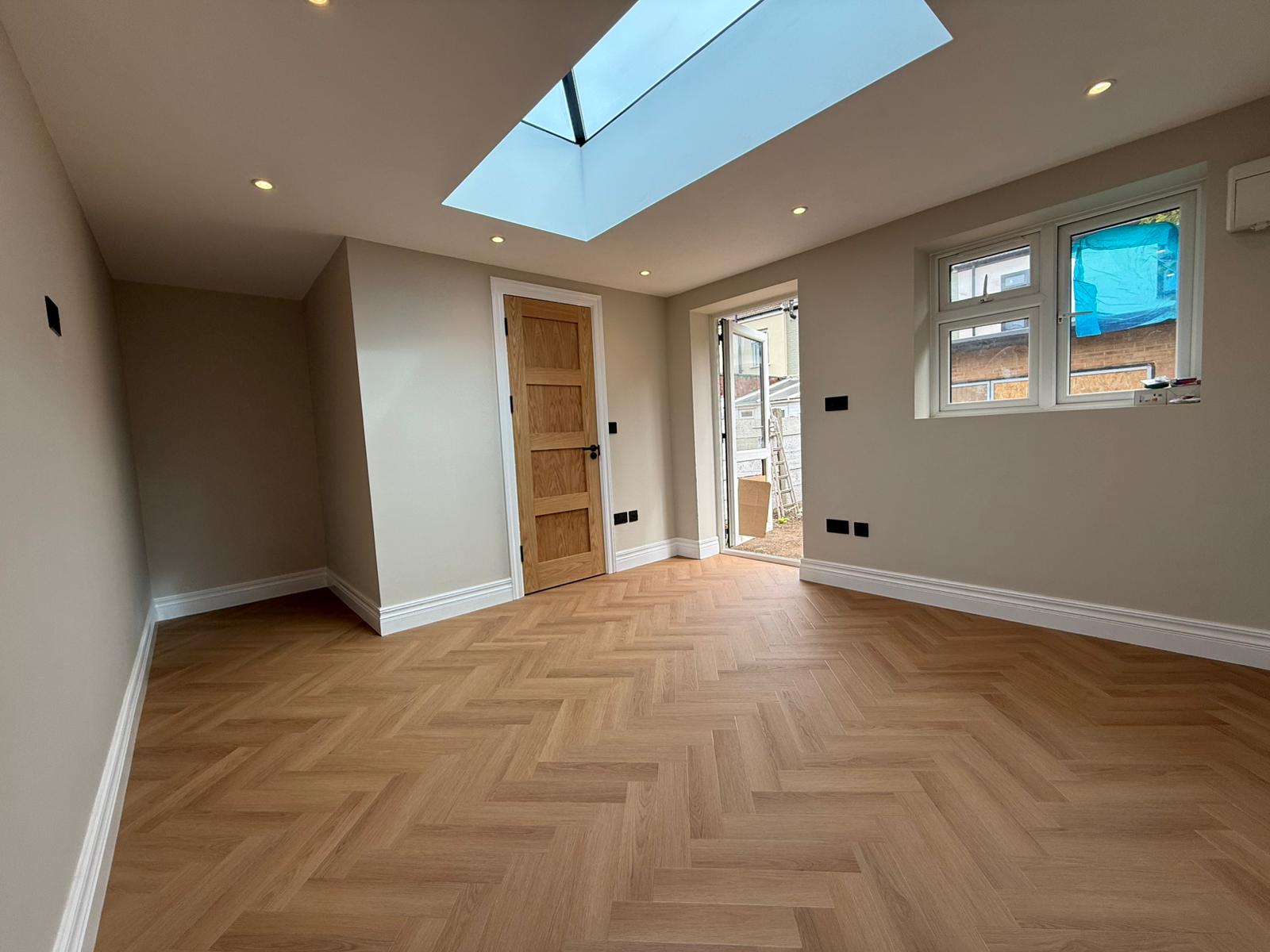
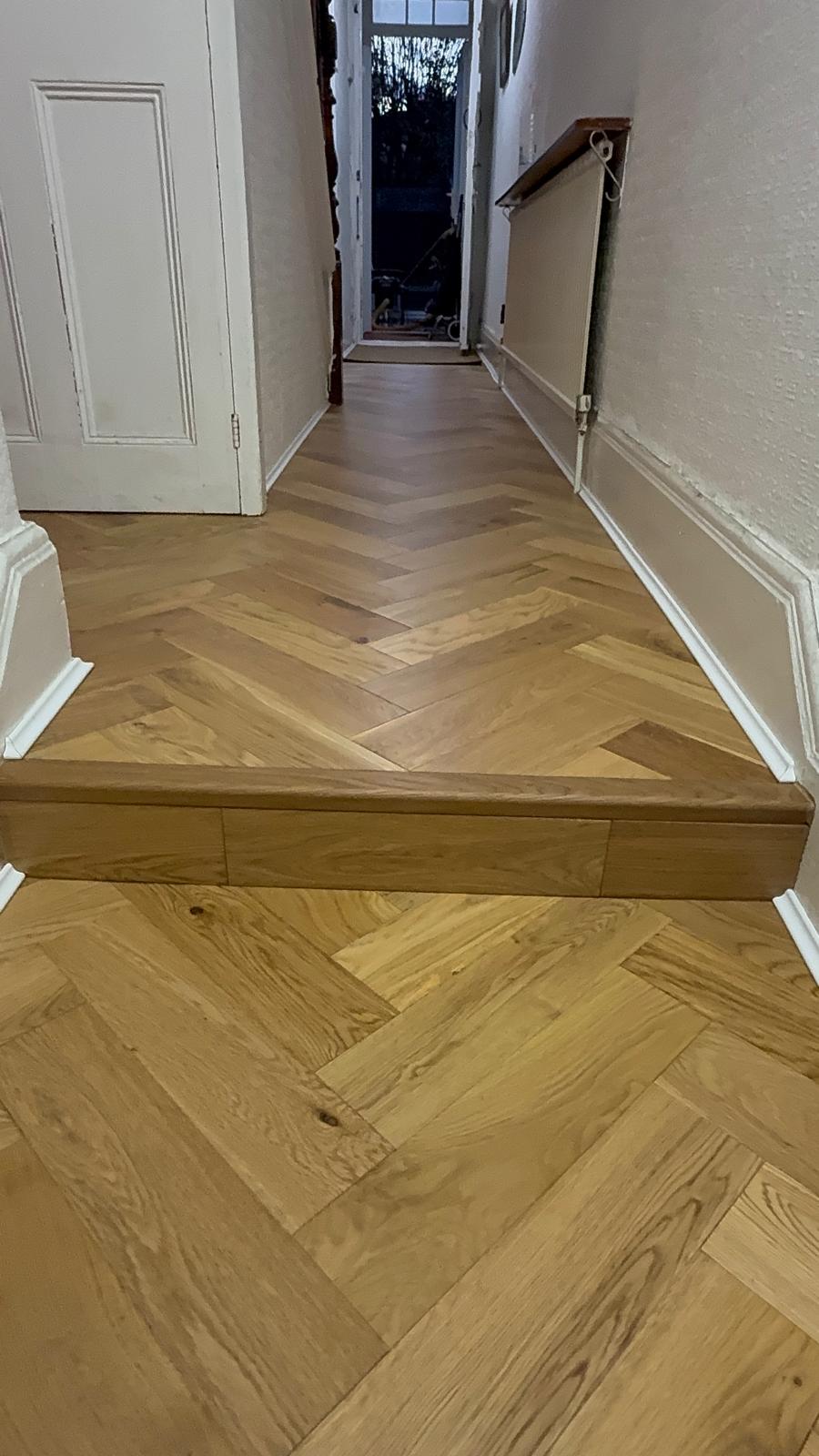
Herringbone uses rectangular blocks laid at 90 degrees, creating a broken zig-zag. Chevron uses blocks cut at an angle — usually 45 or 60 degrees — so the ends meet in a continuous point. Chevron is a mitred, more expensive cut.
How each reads in a room
Herringbone feels traditional and busy in the best sense; it disguises traffic and suits hallways and period homes. Chevron creates strong directional lines that lengthen a space and reads more contemporary and formal.
Setting out
Both patterns live or die on setting out. We dry-lay the centre line against the room's dominant sightline — usually the entrance or the window wall — before a single block is fixed. Borders and perimeter fillets should be planned at survey, not improvised on site.