



Guide · 4 min read
Choosing the right wood flooring
Introduction
Most wood flooring regret comes from choosing a finish before understanding the subfloor. Work through these four decisions in order and the rest becomes straightforward.
Solid or engineered
Solid timber suits stable, ventilated ground floors and rooms without underfloor heating. Engineered boards — a hardwood wear layer over a cross-bonded core — resist seasonal movement, work over heating and allow wider planks. In London homes, engineered is the right answer nine times out of ten.
Board width and length
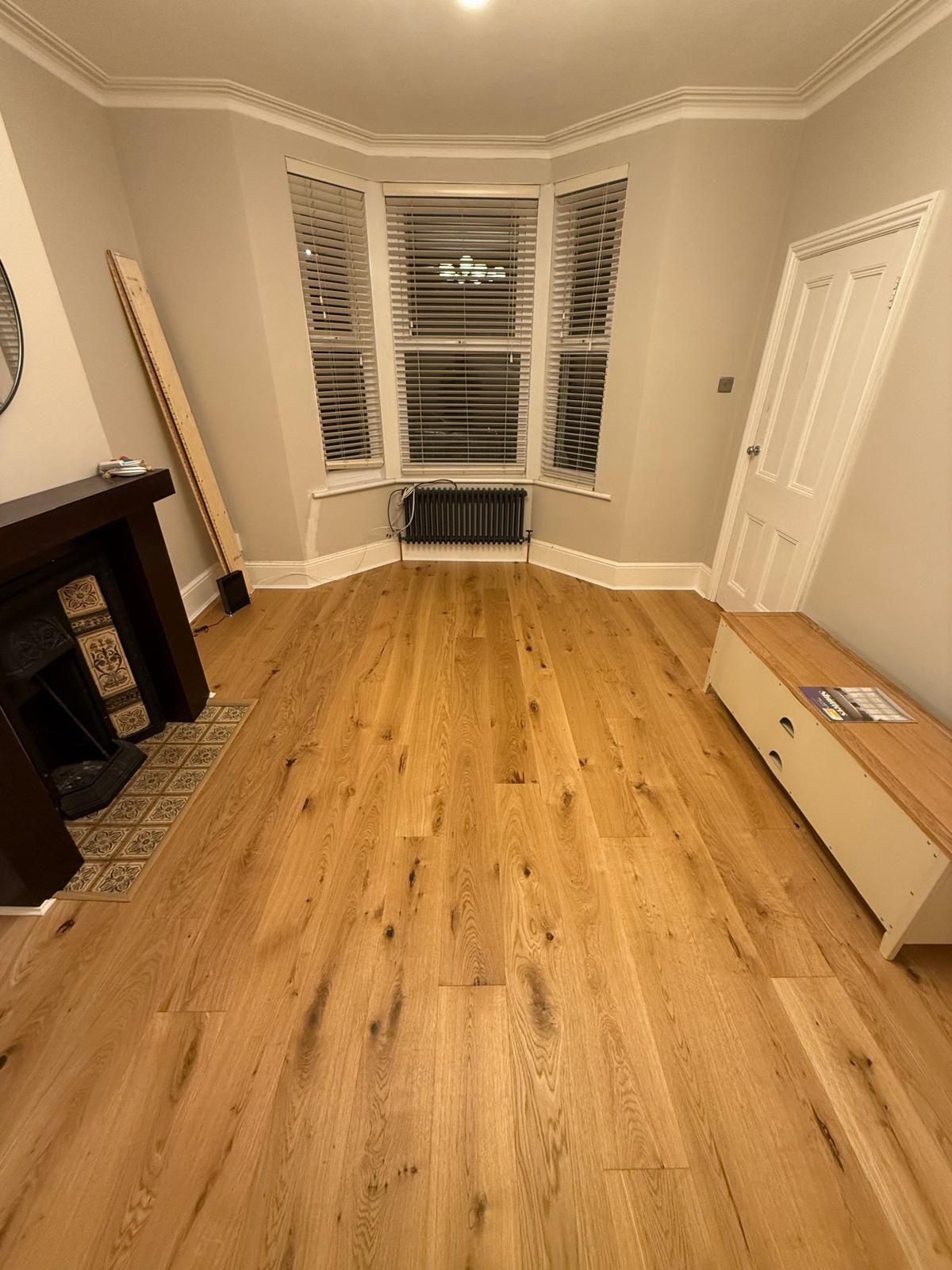
Wide boards calm a large room and can overwhelm a small one. As a rule, keep planks under 180mm in rooms below 20 square metres. Longer boards mean fewer end joints and a quieter floor visually.
Grade and character
Prime grade is near-uniform with minimal knots. Rustic grade carries knots, sapwood and colour variation. Neither is better — but a busy grade under busy furniture reads as clutter.
Finish
Oiled floors are repairable in patches and age beautifully, but need re-oiling. Lacquered floors resist marks harder and need less attention, but a scratch is harder to hide. Choose based on how you want to maintain it, not how it looks in the showroom.